
- In Stock | Ships in 1-3 days
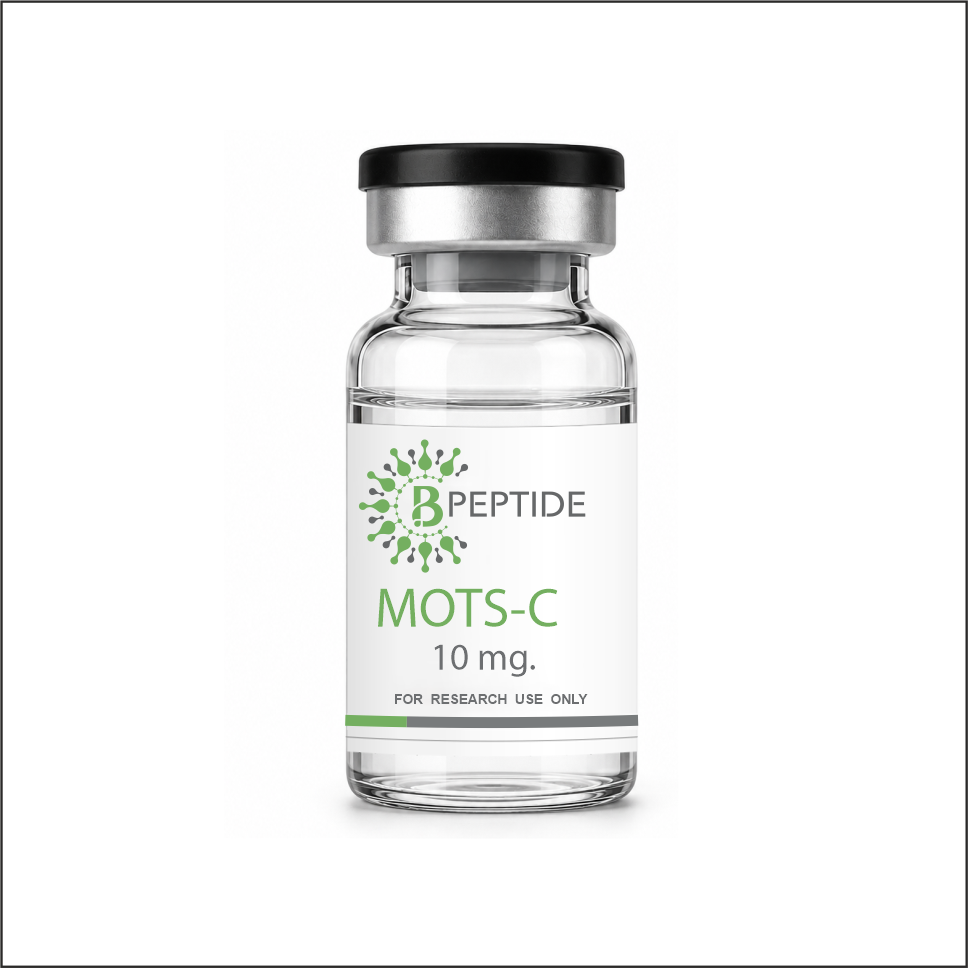
MOTS-C 10mg | Metabolism & Insulin Sensitivity Research Peptide
MOTS-c (Mitochondrial Open Reading Frame of the 12S rRNA-c) is lyophilized mitochondrial derived peptide used in laboratory research on metabolic flexibility, insulin sensitivity markers and cellular energy homeostasis.
$120.00 Original price was: $120.00.$100.00Current price is: $100.00.
- Free Shipping
Suggested protocol
- Timing: Morning
- Cycle: 2-4 weeks ON / 4 week OFF
- Goal: Metabolism, insulin sensitivity

High
Purity

CoA
Available

Cold-Chain
Shipping

Secure
Ordering
MOTS-c (Mitochondrial Open Reading Frame of the 12S rRNA-c) is a 16 amino acid mitochondrial derived peptide (MDP), unusual in that it is encoded by mitochondrial DNA rather than nuclear DNA, within the 12S rRNA region of the mitochondrial genome. First described in 2015, MOTS-c is designed for laboratory investigations into systemic metabolic regulation. Research focuses on its role in enhancing metabolic flexibility, studying insulin sensitivity markers and investigating cellular energy homeostasis. BPeptide’s MOTS-c 10mg is supplied as a lyophilized powder and is verified for identity and purity by independent third party analysis.
AMPK Pathway Activation
Studied for its ability to activate AMP activated protein kinase (AMPK), the master metabolic sensor that regulates cellular energy balance.
Insulin Sensitivity Markers
Researched in published animal models for its impact on glucose tolerance and insulin sensitivity, particularly in age related metabolic decline.
Exercise Mimetic Research
Circulating levels increase during exercise in humans, leading to its characterization as an exercise mimetic in metabolic research.
Nuclear Translocation Signaling
Unique among signaling peptides for its ability to translocate from mitochondria to the nucleus under cellular stress, regulating adaptive gene expression.
Standard Reconstitution Protocol
- Allow the vial to reach room temperature before opening.
- Wipe the rubber stopper with 70% isopropyl alcohol.
- Using a sterile syringe, add 1.0-2.0ml of bacteriostatic or sterile water slowly down the inner wall of the vial so do not inject directly onto the powder.
- Gently swirl until fully dissolved. Do not shake or vortex, this can denature the molecule.
- Label the vial with date of reconstitution.
- Store refrigerated and use within the stability window. Do not freeze.
| Reconstitution solvent | Bacteriostatic water (preferred) or sterile water |
| Recommended volume | 1.0-2.0ml per 10mg vial |
| Storage after reconstitution | 2-8°C, in dark, upright |
| Freeze thaw cycles | Avoid; do not freeze reconstituted solution |
| Suggested cycle | 2-4 weeks ON, 4 week OFF |
| Maintenance cycle | May be repeated every two months for longitudinal tracking |
What is MOTS-c used for in research?
How do you reconstitute MOTS-c 10mg powder?
What is the purity of this MOTS-c peptide?
How should MOTS-c powder be stored?
What is the suggested research protocol timing?
Do you ship internationally?
What is MOTS-c and Why Is It Studied for Metabolism and Insulin Sensitivity?
MOTS-c (Mitochondrial Open Reading Frame of the 12S rRNA-c) is a 16 amino acid peptide with the sequence MRWQEMGYIFYPRKLR. It belongs to a small but growing class of molecules called mitochondrial derived peptides (MDPs), short peptides encoded within the mitochondrial genome rather than nuclear DNA. MOTS-c was first identified in 2015 by researchers at the USC Davis School of Gerontology, who discovered it as a novel mitochondrial signaling molecule with potent metabolic regulatory functions.
The foundational research on MOTS-c demonstrated that it activates AMPK (AMP activated protein kinase), often described as the master metabolic sensor of the cell, triggering a cascade of effects including enhanced glucose uptake, improved insulin sensitivity and increased fatty acid oxidation. In published animal studies, MOTS-c treatment prevented high fat diet induced weight gain and insulin resistance and in older mice it restored insulin sensitivity that had declined with age. The peptide also caused a substantial increase in endogenous AICAR levels via the de novo purine biosynthesis pathway, a finding tied to its metabolic reprogramming effects.
Notably, circulating MOTS-c levels rise during exercise in humans, leading researchers to characterize it as an exercise mimetic, a molecule capable of replicating some of the metabolic benefits of physical activity at the cellular level. MOTS-c is also distinctive for its ability to translocate from the mitochondria to the cell nucleus under conditions of metabolic stress, where it directly regulates the expression of nuclear genes involved in metabolic adaptation.
Related products
-
Metabolism & Weight
TB-500 10mg | Metabolic Regulatory & Insulin Sensitivity Research Peptide
$120.00Original price was: $120.00.$100.00Current price is: $100.00. Add to cart -
Metabolism & Weight
Glutathione 1500mg | Fat Reduction & Muscle Support Research Peptide
$120.00Original price was: $120.00.$100.00Current price is: $100.00. Add to cart
Reviews
There are no reviews yet.