
- In Stock | Ships in 1-3 days
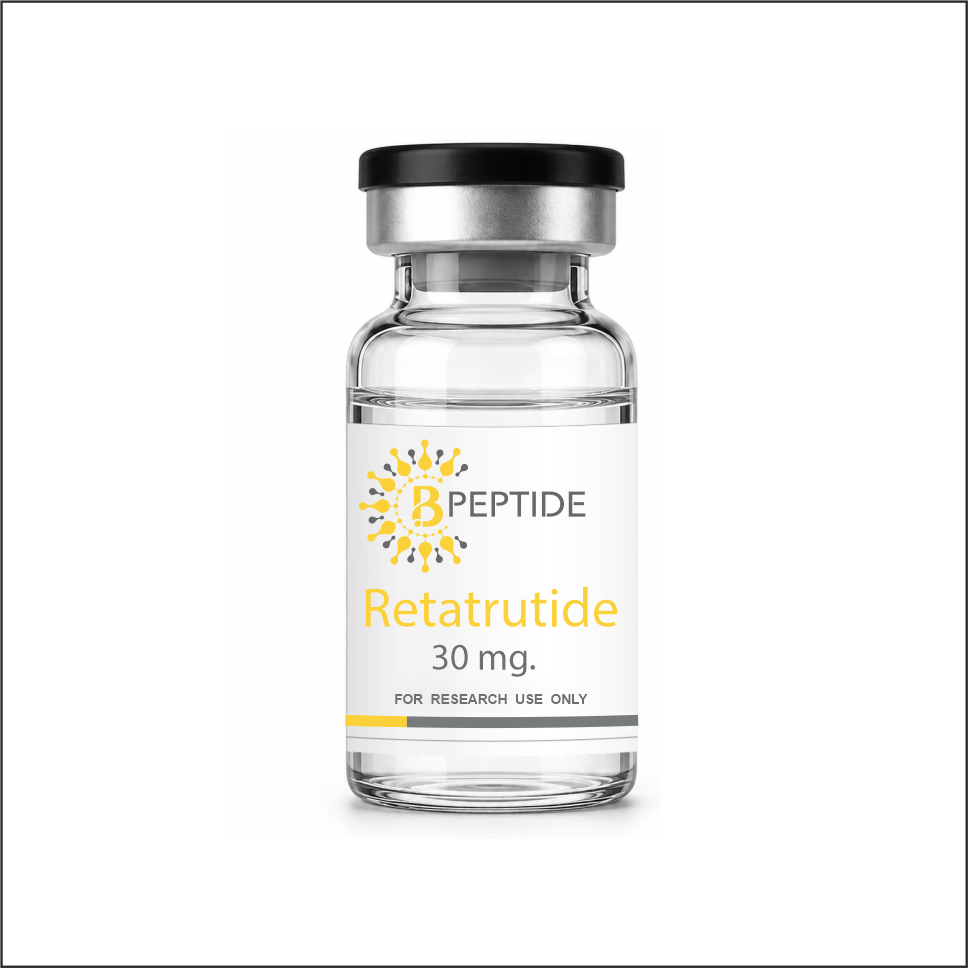
Retatrutide 30mg | Vitality & Anti Aging Research Peptide
Retatrutide (LY3437943) is a synthetic acylated triple GLP-1R/GIPR/GCGR agonist supplied as lyophilized powder for cellular energy, vitality and anti aging pathway research. ≥99% purity.
$120.00 Original price was: $120.00.$100.00Current price is: $100.00.
- Free Shipping
Suggested protocol
- Timing: Morning
- Cycle: 4-6 weeks (optional break 2-4 weeks)
- Goal: Cellular energy, vitality, anti-aging

High
Purity

CoA
Available

Cold-Chain
Shipping

Secure
Ordering
Retatrutide (LY3437943) is a synthetic acylated peptide that simultaneously activates three metabolically critical G protein coupled receptors: the glucagon like peptide-1 receptor (GLP-1R), the glucose dependent insulinotropic polypeptide receptor (GIPR), and the glucagon receptor (GCGR). This triple receptor co-agonism distinguishes Retatrutide from earlier generation incretin compounds and places it at the frontier of cellular energy, vitality and anti aging metabolic research. BPeptide’s Retatrutide 30mg is supplied as lyophilized powder at ≥99% purity, with Certificate of Analysis (CoA) included.
Cellular Energy Research
GLP-1R and GCGR co-activation drives mitochondrial biogenesis via PGC-1α upregulation and enhances cellular ATP production capacity, mechanisms under active investigation in cellular energy biology research.
Anti Aging Pathway Research
GLP-1R signalling intersects with AMPK activation and mTORC1 suppression. GCGR-driven FGF21 production is a longevity associated response linked to caloric restriction biology, a primary focus of anti aging research.
Adipose Biology & Thermogenesis
GIPR driven white adipose lipolysis combined with GCGR-induced BAT UCP1 upregulation provides a complementary dual-adipose model for studying lipid mobilisation and adaptive thermogenesis research.
Flexible Dose Ranging Research
The 30mg formulation enables complete EC50 spanning dose response curve construction across all three receptor subtypes which is essential for characterising receptor selectivity and potency ratios in vitro without using full 50mg supplies per experiment.
FGF21 Longevity Research
GCGR activation induces hepatic FGF21 production, a hepatokine that promotes insulin sensitivity, mitochondrial function, fatty acid oxidation and stress resistance across multiple tissues. FGF21 extends lifespan in transgenic rodent models, making it a key longevity research biomarker.
Triple Agonist Pharmacology
The unique GLP-1R/GIPR/GCGR triple agonism of Retatrutide cannot be replicated by mono- or dual-agonist comparators, making it an essential tool for studying additive and synergistic receptor interaction effects in incretin pharmacology research.
Standard Reconstitution Protocol
- Allow the vial to reach room temperature before opening.
- Wipe the rubber stopper with 70% isopropyl alcohol.
- Using a sterile syringe, add 2.0-5.0ml of bacteriostatic or sterile water slowly down the inner wall of the vial so do not inject directly onto the powder.
- Gently swirl until fully dissolved. Do not shake or vortex because this can denature the molecule.
- Label the vial with date of reconstitution.
- Store refrigerated to prevent ice crystal damage; avoid repeated freeze thaw cycles.
| Reconstitution solvent | Bacteriostatic water (preferred) or sterile water |
| Recommended volume | 2.0-5.0ml per 50mg vial, depending on desired concentration |
| Storage after reconstitution | 2-8°C, in dark, upright |
| Freeze-thaw cycles | Avoid; do not freeze reconstituted solution |
| Suggested cycle | 4-6 weeks ON, 2-4 weeks OFF |
| Maintenance cycle | May be repeated quarterly for longitudinal tracking |
What is Retatrutide (LY3437943) and what makes it a triple agonist?
How does Retatrutide relate to cellular energy and vitality research?
What is FGF21 and why is it relevant to anti aging research using Retatrutide?
Why choose the 30mg formulation over the 50mg?
How is Retatrutide 30mg reconstituted for research use?
What purity and documentation does this product meet?
Does BPeptide ship Retatrutide internationally?
What is Retatrutide and Why Does It Matter for Vitality and Anti-Aging Research?
Retatrutide (LY3437943) is a synthetic acylated peptide developed by Eli Lilly & Company currently in Phase 3 clinical development. It is classified as a unimolecular triple agonist, a single peptide molecule that simultaneously activates the glucagon like peptide-1 receptor (GLP-1R), the glucose dependent insulinotropic polypeptide receptor (GIPR) and the glucagon receptor (GCGR). This triple receptor co-activation represents a pharmacological advance beyond the GLP-1R monoagonists (semaglutide, liraglutide) and GLP-1R/GIPR dual agonists (tirzepatide) that preceded it in the incretin research field.
The scientific rationale for triple receptor co-activation is grounded in the complementary and partially non overlapping biology of the three receptor systems. GLP-1R drives glucose dependent insulin secretion from pancreatic beta cells, reduces appetite via hypothalamic circuits and in non pancreatic tissues activates AMPK, a central energy sensor that promotes mitochondrial biogenesis, fatty acid oxidation and glucose uptake independently of insulin. AMPK is also a canonical target of longevity interventions: metformin, rapamycin and caloric restriction all converge on AMPK/mTOR pathway modulation. GIPR in adipocytes phosphorylates and activates hormone sensitive lipase (HSL) and perilipin-1, releasing stored triglycerides as free fatty acids for mitochondrial beta oxidation providing cellular energy substrate mobilisation research. GCGR in brown adipose tissue (BAT) and liver drives two of the most scientifically compelling mechanisms in the compound’s anti aging research profile: BAT UCP1/PGC-1α upregulation (thermogenesis and mitochondrial biogenesis) and hepatic FGF21 secretion.
FGF21 and the longevity connection represent the most pharmacologically novel aspect of Retatrutide in the anti aging research context. Fibroblast growth factor 21 (FGF21) is a hepatokine produced in response to GCGR activation, PPAR-α agonism (fasting, ketogenic states) and caloric restriction. It signals through a co-receptor complex of FGFR1c and β-Klotho, which is highly expressed in white adipose tissue, the hypothalamus and skeletal muscle. FGF21 promotes whole body insulin sensitivity, reduces lipotoxicity, enhances mitochondrial oxidative phosphorylation efficiency and activates stress response pathways (via PGC-1α and SIRT1). In transgenic mouse models overexpressing FGF21, median lifespan is extended by approximately 36%, one of the most robust longevity phenotypes observed in rodent models. The ability of Retatrutide to pharmacologically induce FGF21 production through GCGR activation makes it a research tool for studying FGF21-mediated metabolic longevity biology.
BPeptide supplies Retatrutide 30mg lyophilized powder at ≥99% purity for use in cAMP reporter assays, receptor binding studies, FGF21 secretion assay panels, adipocyte lipolysis experiments, thermogenesis gene expression studies (UCP1, PGC-1α) and other validated laboratory research applications.
Related products
-
Energy & Anti Aging
Retatrutide 50mg | Enhanced Vitality & Anti Aging Research Peptide
$120.00Original price was: $120.00.$100.00Current price is: $100.00. Add to cart -
Energy & Anti Aging
NAD+ 1000mg | Cellular Energy & Anti Aging Research Peptide
$120.00Original price was: $120.00.$100.00Current price is: $100.00. Add to cart
Reviews
There are no reviews yet.